Part III: Platform and service compromise
A model that passed evaluation can still be exposed through acquired software, shared infrastructure, or the identities and interfaces of the running service.
Downloaded models and packages become inputs to a running service. Their origin and integrity matter before deployment, but checks on those files do not establish that a host isolates tenants or that an interface limits access. Chapter 7 examines acquired components, Chapter 8 examines shared infrastructure, and Chapter 9 follows identities, network access, and resource use during operation. Internal and external model arrangements assign different controls and evidence to the organization and its providers.
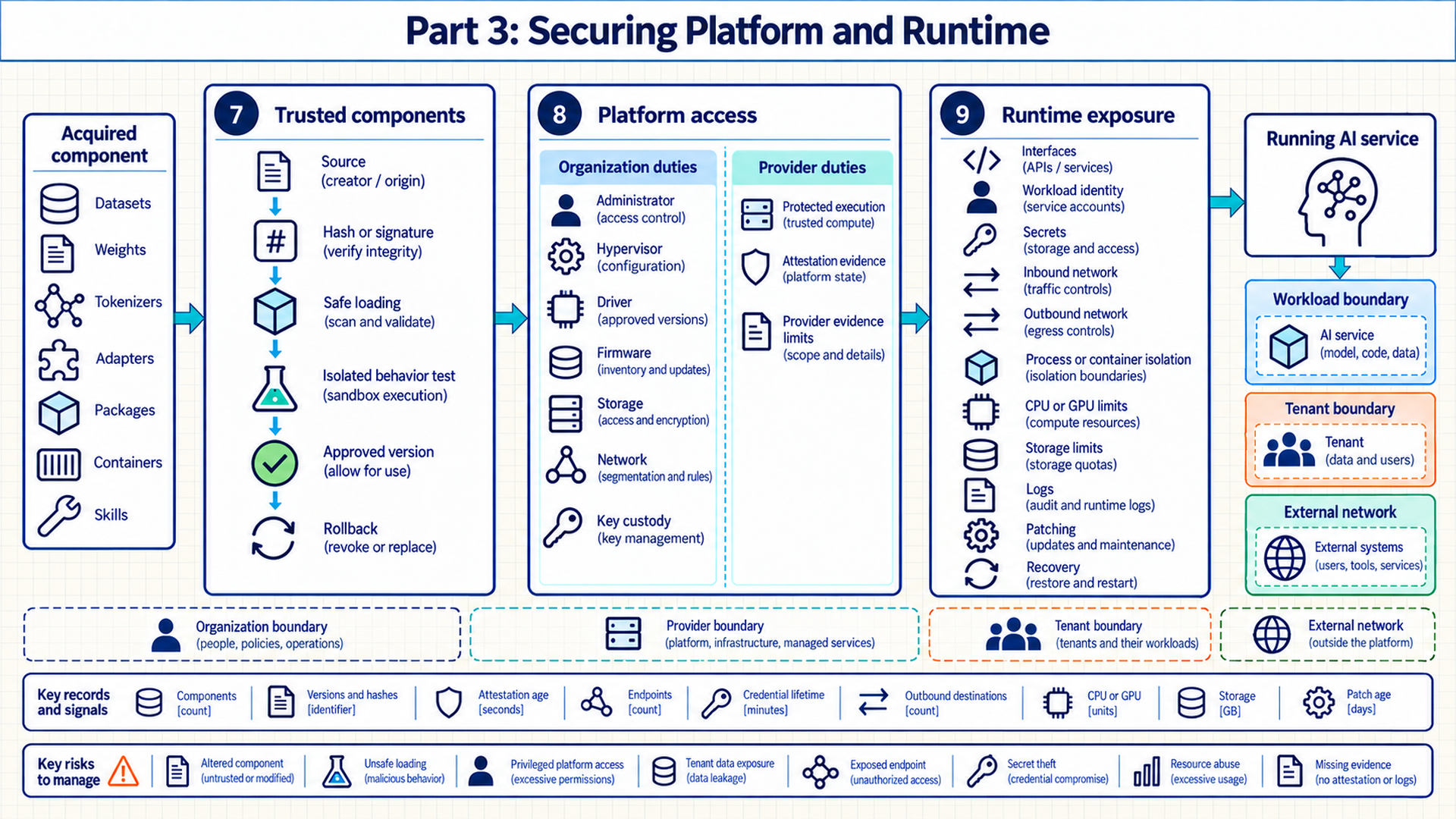
Chapters in this part
- Supply chain compromise: A model file from the intended supplier can still execute unwanted code during loading or behave harmfully during use.
- Isolation on shared infrastructure: Data processed by an AI service can be exposed or altered through the platform on which it runs.
- Runtime intrusion and resource abuse: Exposed interfaces, stolen credentials, unrestricted network access, and excessive work can compromise an AI service or make it unavailable to legitimate users.